
Copper and Steel Weathervanes for Gardens, Sheds, Barns and Garden Rooms: A Complete Guide to Choosing the Perfect Weathervane
Few architectural roof ornaments have remained as enduring as the traditional weathervane. For centuries they have served both as practical wind indicators and as elegant decorative features that complete the roofscape of homes, agricultural buildings, workshops, stables, churches and country estates. Today, homeowners continue to search for copper weathervanes for sheds, steel weathervanes for garden rooms, barn weathervanes, decorative roof ornaments and wind direction indicators because they offer a unique combination of craftsmanship, functionality and visual appeal. Whether your property is a contemporary garden office or a period cottage, a carefully selected weathervane creates an attractive focal point that draws the eye upwards and enhances the overall architectural character of the building. Choosing the right weathervane involves much more than selecting a favourite design. Roof pitch, mounting position, surrounding trees, prevailing winds and the proportions of the building all influence which style will look and perform best. Smaller garden sheds often suit elegant bird or cockerel designs, while larger barns and agricultural buildings can comfortably carry more substantial motifs such as horses, tractors, dragons or ships.
Heritage properties often benefit from traditional copper silhouettes that naturally complement historic brick, slate and clay tile roofs, whereas modern garden rooms frequently pair beautifully with contemporary steel designs finished in black or hand painted colours. Selecting the correct bracket or mounting arrangement is equally important, ensuring the vane can rotate freely while remaining securely fixed for many years. Material selection is another important consideration. Polished copper develops a beautiful natural verdigris finish over time through exposure to the weather, giving every installation its own individual character. Some verdigris weathervanes are supplied with an already matured appearance using carefully controlled patination techniques, while polished copper versions are intentionally supplied bright so owners can enjoy watching the surface gradually weather and develop naturally. Steel weathervanes provide a different aesthetic, offering crisp detailing and durable finishes that complement both traditional and contemporary architecture. As specialist suppliers, we carefully source quality copper and steel weathervanes from trusted manufacturers before supplying them throughout the United Kingdom. Products can be shipped nationwide across mainland England and Wales, allowing customers to complete projects ranging from small garden buildings through to substantial commercial developments.
Whether you are restoring a period property, finishing a newly constructed oak framed garden room or simply adding character to an existing workshop, a well chosen weathervane becomes far more than a decorative accessory. It reflects the personality of the owner while respecting the architectural style of the building beneath it. Throughout this guide we explain how copper and steel weathervanes differ, where they work best, how to choose the correct design, what to consider before installation and how to select a quality product that will continue to enhance your roofline for decades.
Contents
- Why choose a copper or steel weathervane?
- Understanding copper and steel finishes
- Where can a weathervane be installed?
- From choosing to installation
- Products and related categories
- Frequently asked questions
Why Choose a Copper or Steel Weathervane?
Copper and steel remain the two most popular materials for quality weathervanes because each offers distinct architectural qualities. Copper provides warmth, traditional character and develops a naturally aged verdigris surface that has been admired on rooftops for centuries. Steel offers sharper detailing with a contemporary appearance that works exceptionally well on modern buildings while remaining equally at home on traditional structures.
Beyond appearance, both materials provide reliable wind direction indication when correctly installed. A balanced weathervane turns freely with changing wind conditions while creating an attractive focal point that enhances the skyline of the building beneath it.
Understanding Polished Copper, Verdigris Copper and Steel
Many customers ask about the difference between polished copper and verdigris finishes. Polished copper arrives with a bright reflective surface that slowly changes colour through natural weathering. Over time this develops into the distinctive verdigris finish associated with historic architecture. Some verdigris models are supplied with an accelerated patina created using specialist finishing techniques, giving the appearance of naturally aged copper from the day of installation.
Steel weathervanes provide a different style entirely. Their clean detailing suits modern garden buildings, workshops, garages and contemporary homes while still complementing traditional farm buildings and country properties. Available finishes allow customers to match surrounding architectural features and roof materials.
Where Can a Weathervane Be Installed?
One of the greatest advantages of a quality weathervane is its versatility. Popular installation locations include:
- Garden sheds and timber workshops.
- Garden rooms and home offices.
- Agricultural barns and stables.
- Oak framed buildings.
- Summer houses.
- Pubs and commercial premises.
- Gazebos and pavilions.
- Garages and outbuildings.
When selecting a location, always consider roof height, nearby trees and surrounding buildings. Positioning the weathervane where it enjoys unrestricted airflow will provide the best movement while allowing it to become a prominent architectural feature.
Project Gallery
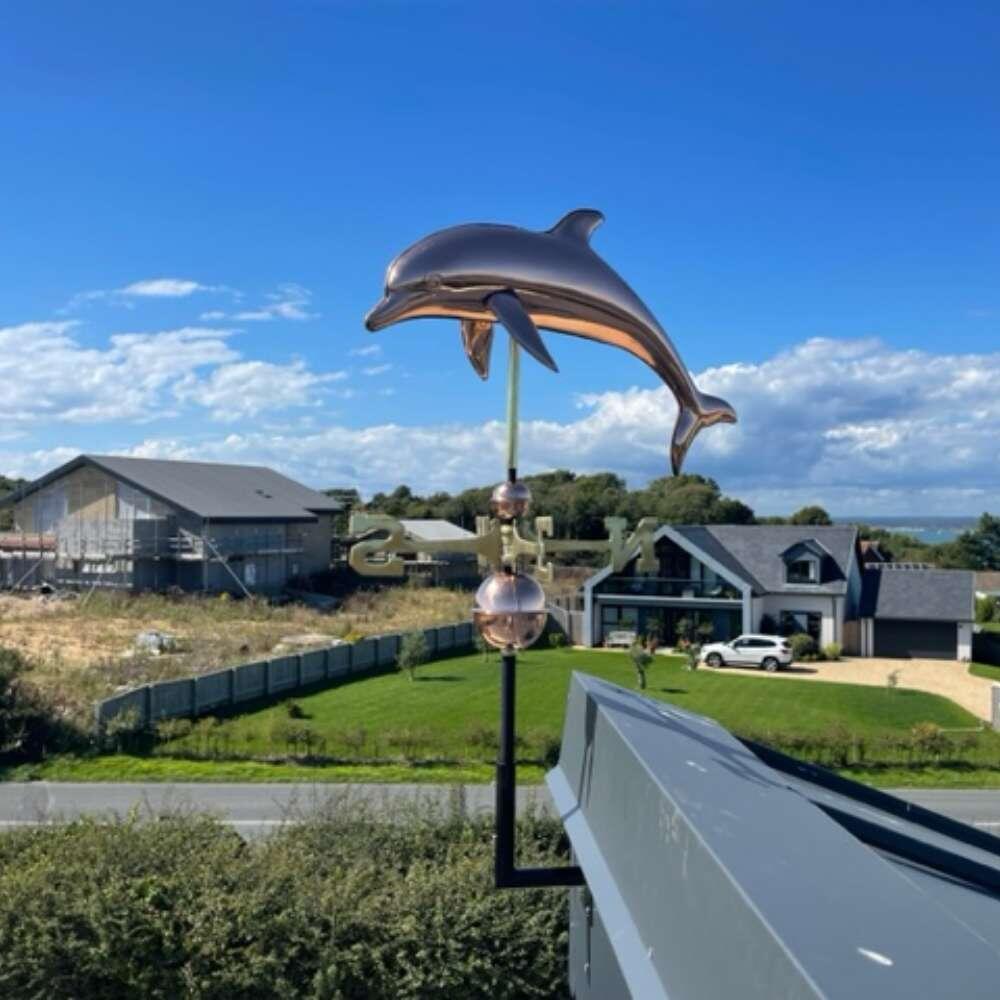
From Inspiration to Installation
Finding the right design. Most customers begin by choosing a weather vane that reflects their interests, property or hobby. Popular choices include cockerels, horses, wildlife, dragons, ships and sporting themes.
Selecting the correct size. The overall scale should suit the proportions of the building. Larger barns benefit from more substantial silhouettes, while compact sheds often look better with smaller elegant designs.
Ordering. Once the preferred design and finish have been selected, choosing the correct fixing bracket or ridge mounting ensures compatibility with the intended roof.
Production and finishing. We carefully source quality weathervanes from specialist manufacturers. Polished copper models are supplied with their bright natural finish, while verdigris versions are supplied either naturally weathered or with a carefully accelerated verdigris finish depending upon the chosen product.
Delivery. Orders are carefully packaged before being shipped nationwide across mainland England and Wales.
Installation. Correct installation allows the weathervane to rotate freely while remaining securely fixed to the roof structure. Careful positioning provides accurate wind direction and maximises the visual impact of the finished installation.
Products Used and Related Categories
Whether you are searching for a traditional country house design or a contemporary architectural statement, these collections provide an excellent starting point:
- Large copper dolphin weathervane
- All Weathervanes
- Polished Copper Weathervane Designs
- Copper Verdigris Weathervane Designs
- Steel Weathervane Designs
Frequently Asked Questions
Do copper weathervanes turn green?
Yes. Bright polished copper gradually develops a natural verdigris surface through exposure to the weather. This is a normal characteristic of genuine copper and is highly valued for its traditional appearance.
Can I buy a weathervane that already has a verdigris finish?
Yes. Selected vanes are available with a verdigris appearance.
Are steel weathervanes suitable for modern homes?
Absolutely. Steel designs work particularly well with contemporary architecture while remaining equally suitable for workshops, garages, barns and traditional buildings.
Where is the best place to install a weathervane?
The highest practical point on the roof generally provides the best airflow and the greatest visual impact. Ensure surrounding trees and structures do not restrict movement.
How do I choose the correct size?
The overall proportions of the building should guide your choice. Larger buildings usually require larger silhouettes to remain visually balanced from ground level.
Do I need a special bracket?
The mounting method depends upon your roof construction. Ridge mounted, side mounted and vertical brackets are available for different installation requirements.
Complete Your Roof with a Quality Copper or Steel Weathervane
A well chosen weathervane is far more than a decorative ornament. It is an architectural feature that adds movement, character and lasting value to garden buildings, workshops, barns and homes. Whether you prefer the evolving beauty of polished copper, the established character of verdigris copper or the crisp detailing of steel, exploring our specialist collections will help you find the perfect design for your property.
Featured Products


Boxing hares weathervane


Large copper arrow weathervane


Large copper banner weathervane


Large copper biplane weathervane


Large copper verdigris dolphin weathervane


Large copper verdigris stag weathervane


Large copper verdigris victorian arrow weathervane

