
Jumping Horse Weathervane on a Tower Roof
Few architectural features call for a weathervane quite as compellingly as a decorative tower. When a customer recently shared photographs of their copper verdigris jumping horse weathervane installed on just such a structure, we knew it deserved an article of its own. The combination of an ornate dome, diamond patterned metal shingles, and a galloping copper figure against clear blue sky is the kind of installation that stops people in their tracks. In this guide we walk through what makes this particular pairing work so well, what to consider when choosing a weathervane for a tower or complex roofline, and how to find the right horse weathervane for your own property.
The Installation: A Jumping Horse on a Heritage Tower
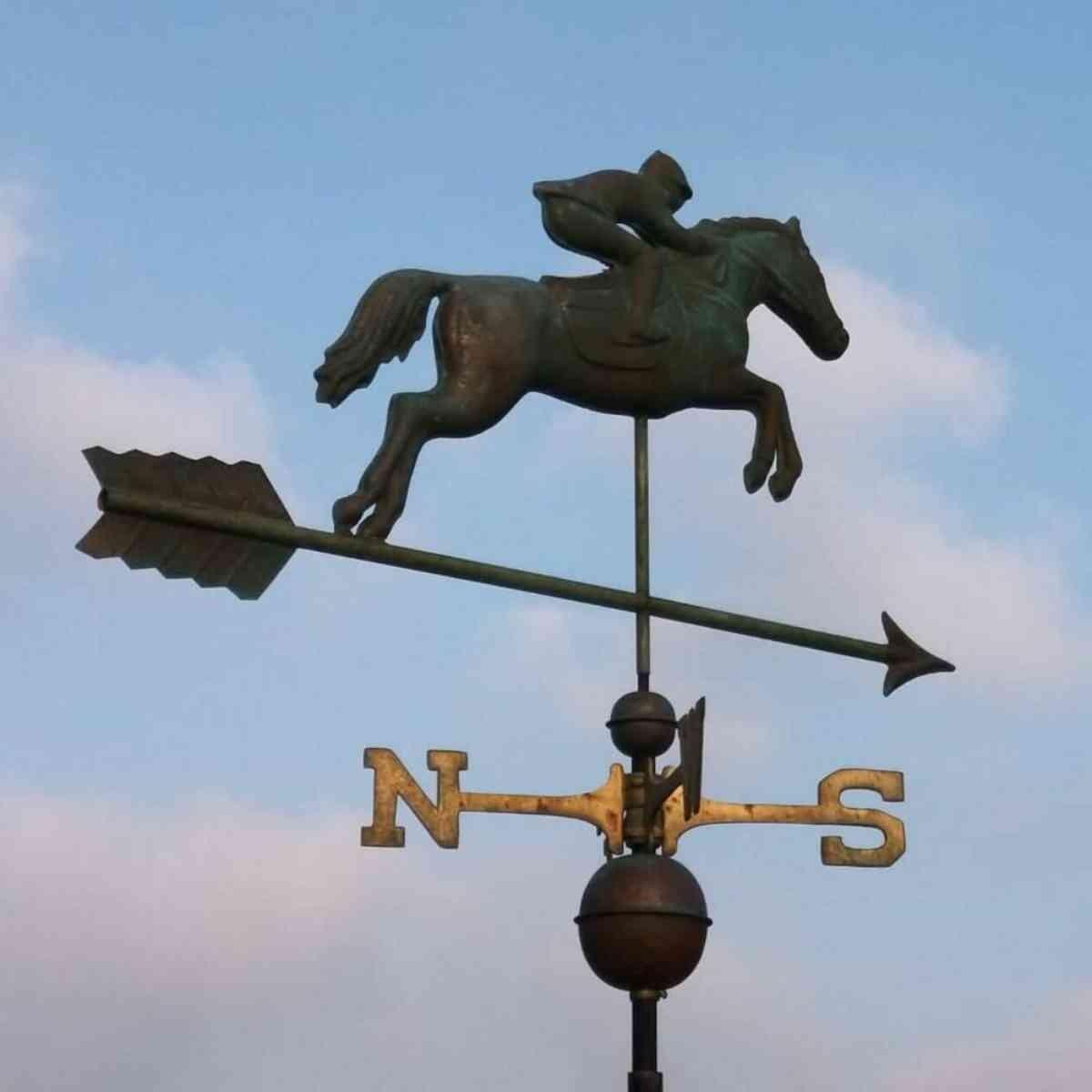
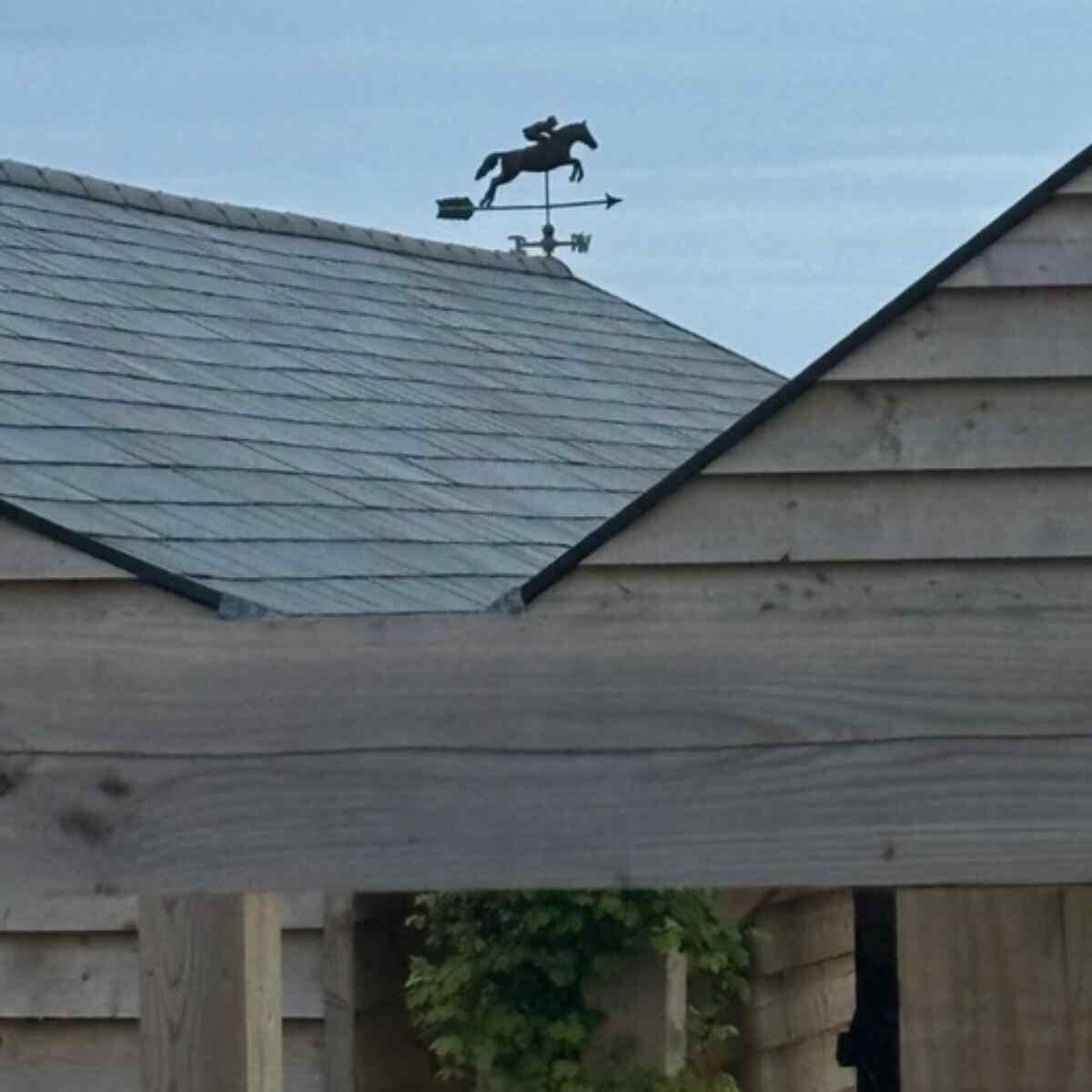
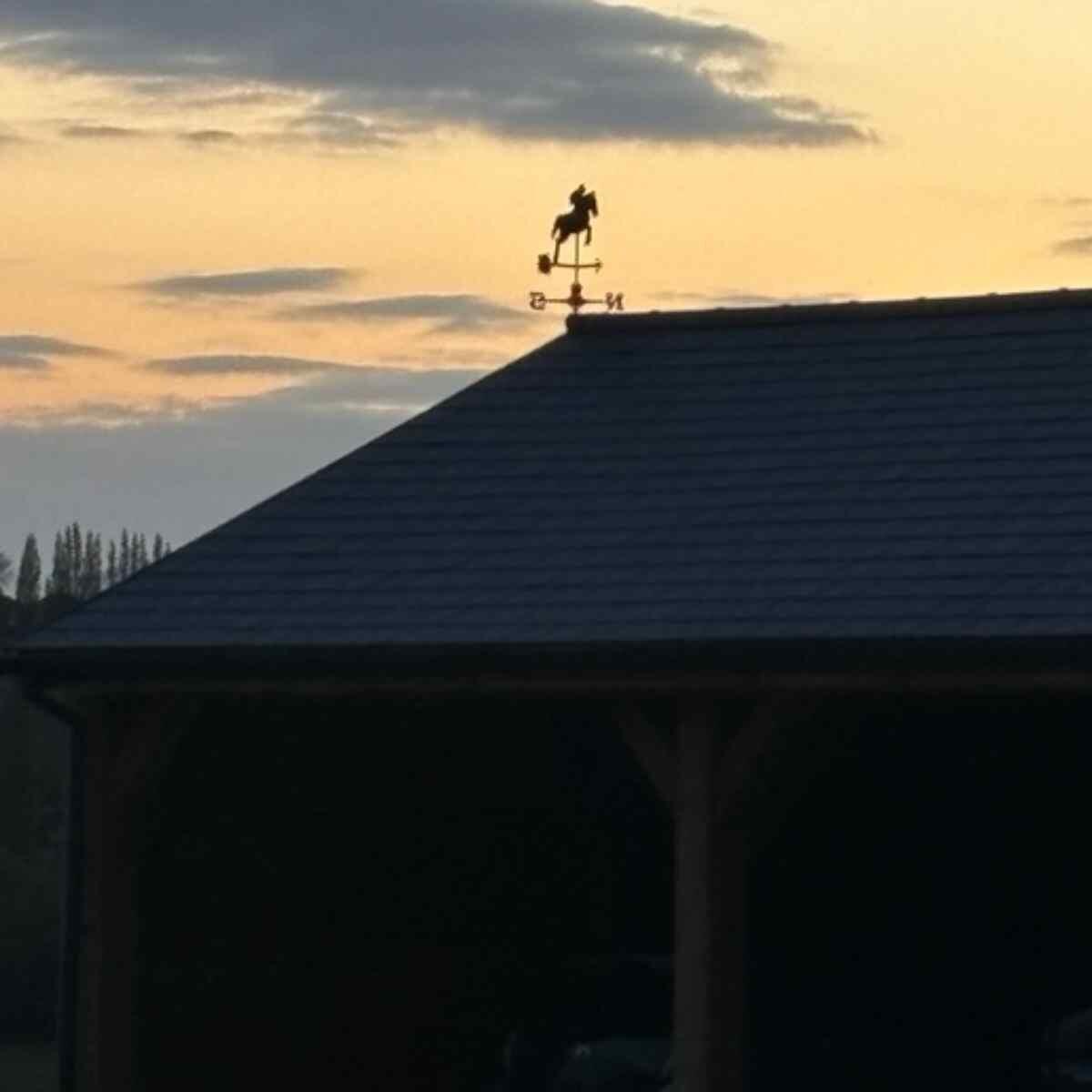
The photographs here show a weathervane positioned at the very apex of a decorative tower, sitting above an aged copper dome and a white ornamental belfry section with arched openings. Below the belfry, steeply pitched roof panels clad in diamond pattern metal shingles complete the composition. It is a layered, characterful roofline, and the jumping horse weather vane sits above it all with complete authority. The weathervane itself is our Large Copper Vintage Race Horse Weathervane, finished in a natural verdigris patina. The figure depicts a horse and rider clearing an obstacle, which could just as easily read as a show jump, a hedge in a cross country course, or the kind of hedge leap more commonly associated with traditional point to point racing. That interpretive quality is part of what makes it such a versatile design. The cardinal point directionals sit beneath the figure on the weathervane rod, and in the photograph the East and West arms are clearly visible, confirming the weathervane is doing exactly what a weather vane should do: turning freely to face the prevailing wind.
The aged green of the verdigris copper figure echoes the patina of the dome beneath it, creating a visual coherence across the entire tower that looks entirely natural rather than added on. This is one of the most important things to get right when choosing a weathervane for a heritage structure: the finish should feel as though it belongs to the building rather than sitting on top of it.
Image Gallery


Why Tower Roofs Suit a Weathervane So Well
A decorative tower offers the ideal platform for a weathervane for two reasons. First, it is typically the highest point of a building, which means the weathervane is exposed to unobstructed airflow and will turn responsively even in light wind. Second, the tower draws the eye upward, meaning any feature placed at its apex becomes a focal point of the entire property. A weathervane on a tower is not a detail: it is a defining element of the building's character. In the case of this installation, the roofline already contained significant visual interest: the dome, the arched belfry openings, the diamond shingle panels. A plain or overly simple weathervane would have been lost in that richness. The horse and jockey figure has enough sculptural presence and silhouette clarity to hold its own above all of that detail. When assessing any complex or architectural roofline for a weathervane, we would always recommend choosing a figure with a strong, readable outline from ground level. Horses, stags, birds in flight, and galleons all tend to work well for exactly this reason. Heritage and character properties with towers, cupolas, gazebos, and decorative pinnacles are among the most rewarding installations to see. They are also increasingly common customers for us, as more homeowners restore or renovate period buildings and want to finish them properly. A weathervane is often the last piece of the puzzle, and when it is chosen well it transforms a restoration from competent to complete.
Copper Verdigris and Aged Patina Explained
The weathervanes in this article are pure copper that has been naturally aged outside to develop a genuine green verdigris patina. This is not a paint or chemical dip: the pieces age outdoors in the elements over an extended period, which means the patina is real and the tonal variation across the surface is entirely natural. No two verdigris weathervanes look exactly the same as a result, and the colour deepens and shifts with further exposure over the years. The ageing process mirrors what happens to historic copper roofing, guttering, and architectural metalwork over decades. That is precisely why a verdigris weathervane coordinates so naturally with aged copper domes, lead flashings, green oak structures, and mellow stone or brick. On the tower featured here, the continuity between the dome and the weathervane above it is striking precisely because both surfaces are genuine oxidised copper rather than approximations of it. We supply the copper verdigris range alongside our polished copper weathervanes, which have a warm bright finish and develop their own patina gradually in situ. You can browse both in our copper verdigris weathervanes category and our polished copper weathervanes category. For properties where a more mellow, already aged appearance is the goal from day one, the verdigris range is the natural starting point.
Choosing a Horse Weathervane Design
Our animal weathervanes category includes several distinct horse designs, and understanding the differences between them helps enormously when making a choice. The Large Copper Vintage Race Horse Weathervane featured in this article depicts a horse and rider clearing an obstacle, and the figure works for those with an interest in horse racing, show jumping, or simply equestrian life in general. The interpretive quality of the design means it appeals across those disciplines. For those who want a horse figure without the rider and obstacle, the Large Copper Running Horse Weathervane is a strong alternative in polished copper, with excellent mane, body, and leg definition making a clean and energetic silhouette. The Large Pure Copper Antique Weathered Horse Weathervane offers a similarly aged verdigris finish on a more traditional standing or walking horse pose, better suited to classical or restrained property styles. For those drawn to the racing and equestrian theme but wanting something that reflects the finish line rather than the jump, the Winning Post Weathervane is worth considering. All of these are available in sizes suited to different roof heights and viewing distances. As a general principle, larger roofs, towers, and elevated positions benefit from the larger scale figures, which hold their silhouette and detail at greater distance.
Horse Weathervanes as a Gift
Horse weathervanes are consistently among our most popular gift choices, particularly for those with a genuine equestrian connection. They make thoughtful and lasting birthday or Christmas presents for horse owners, event riders, and racing enthusiasts, and they are a genuinely distinctive choice for a retirement, long service, or leaving gift for someone involved in equestrian sport or the horse world professionally. A weathervane is something the recipient is unlikely to buy themselves and unlikely to forget. For gifting purposes the polished copper horse weathervane range often appeals as the finish photographs well and arrives looking immediately impressive. The verdigris pieces carry more of a heritage, established quality and suit recipients who appreciate craftsmanship and the idea of something that will weather and mature over time. We can ship across UK mainland England and Wales, making it straightforward to send a gift directly to the recipient's address.
The Buying Process
The process of buying a weathervane from us is straightforward. Browse the copper weathervanes range or the specific horse weathervane product pages to find a design and size that suits the property and the roof height. Each product page carries full dimensional information so you can assess how the figure will read from ground level. Each weathervane is supplied with a standard 125mm (5 inch) eaves bracket as standard, which suits the majority of roof types. For other mounting situations including ridge tiles, gable ends, post mounting, or flat roof structures, we supply a full range of brackets and fittings which can be selected separately. It is worth identifying the mounting position before ordering to make sure you have everything needed for the installation. Delivery is available across UK mainland England and Wales. Assembly is straightforward and each weathervane arrives with step by step instructions. The weathervane rod is a 19.5mm diameter steel tube with a durable exterior black powdercoat finish. The cardinal point NSEW directionals are cast brass, the globes and spacers are copper, and the figure itself is pure copper hand crafted and brazed. Once installed, the single point contact design allows the weathervane to turn freely in even light wind conditions.
Products Featured in This Article
- Large Copper Vintage Race Horse Weathervane (featured in the installation above)
- Large Copper Jumping Horse Weathervane (polished copper version of the jumping horse and rider design)
- Large Copper Running Horse Weathervane
- Large Pure Copper Antique Weathered Horse Weathervane
- Winning Post Weathervane
- Copper Verdigris Weathervanes Category
- Animal Weathervanes Category
Frequently Asked Questions
Will a weathervane work on a tower or cupola roof?
Yes, tower and cupola positions are among the best possible locations for a weathervane. They are typically the highest exposed point on a building, giving unobstructed airflow and excellent visibility from ground level. The main consideration is choosing the right bracket for the mounting point: a roof apex, a flat platform, or a post at the top of the tower each requires a different fixing approach. Our brackets and fittings range covers all of these scenarios.
What is the difference between the polished copper and the verdigris copper horse weathervanes?
Polished copper weathervanes have a warm, bright finish when they leave us and develop their own patina gradually over years of outdoor exposure. Verdigris copper weathervanes have been aged naturally outside at the supplier's workshop, developing a genuine green oxidised patina before they are sold. The verdigris finish immediately reads as a piece of heritage metalwork and coordinates naturally with aged materials such as lead, green oak, stone, and existing oxidised copper.
What size horse weathervane should I choose for a tall or prominent roof?
For towers, tall gable ends, and elevated rooflines where the weathervane will be viewed from a significant distance, the larger scale figures will almost always make a stronger visual statement and hold their silhouette and detail better. The product pages carry dimensional information for each piece, and we would generally recommend erring toward the larger size if the mounting point is more than about 5 to 6 metres above viewing level.
Can I buy a jumping horse weathervane as a gift?
Absolutely. Horse weathervanes are one of our most popular gift purchases, particularly for equestrian enthusiasts, horse owners, and those with a connection to racing or show jumping. They make distinctive birthday, Christmas, retirement, and leaving gifts. We ship across UK mainland England and Wales, so it is straightforward to have an order delivered directly to the recipient.
Does the weathervane come with everything needed for installation?
Each weathervane is supplied with a standard 125mm (5 inch) eaves bracket, the steel weathervane rod, copper globes, cast brass NSEW cardinal points, the weathervane figure itself, and step by step assembly instructions. For installations on ridge tiles, gable posts, flat roof structures, or 4 sided roofs, additional brackets are available separately from our brackets and fittings section.
Explore Our Range
Whether you are fitting out a heritage tower, completing a barn conversion, or simply looking for the right finishing touch for a property you are proud of, our horse weathervane range has a design and finish to suit. Browse the full collection through the links above, or visit our copper weathervanes and animal weathervanes categories to see everything we supply. If you have a specific installation in mind and want to discuss which product and bracket combination is right for it, our contact page is the best place to start.
Featured Products


Boxing hares weathervane


Large copper arrow weathervane


Large copper banner weathervane


Large copper biplane weathervane


Large copper verdigris dolphin weathervane


Large copper verdigris stag weathervane


Large copper verdigris victorian arrow weathervane
