
Large Copper Victorian Arrow Weathervane on a Stone Tower
There are buildings that seem to have always had a weathervane, and there are buildings that make you understand immediately why a weathervane belongs there. The octagonal stone tower in these two photographs is the second kind. Captured in two extraordinary images taken at different times of day at a historic building somewhere in the UK, a large copper Victorian arrow weathervane crowns the tower's apex with exactly the kind of quiet authority the architecture demands. The daytime shot reveals every detail of the classical stonework, the dentil moulding beneath the eaves and the arched window frames below. The night shot transforms the scene entirely, the ornate silhouette of the arrow figure sharp against a dramatic, cloud filled sky. In this article we explore what makes a Victorian arrow weathervane such a natural companion to historic architecture, the particular demands of stone tower installations, and why this design makes such a lasting and meaningful gift.
A Victorian Arrow Weathervane on a Historic Stone Tower
The building in these photographs is a fine example of classical British institutional architecture. The octagonal tower rises from a base of light tan blockwork, its weathered stone showing the subtle marks of age and environmental wear that only time and genuine exposure can produce. Dentil moulding beneath the eaves and arched recessed window frames containing dual pane windows confirm a building that was designed with care for detail and built to endure. This is the kind of structure that earns a weathervane through its own architectural language rather than simply accommodating one.
At the very apex of the tower, the large copper Victorian arrow weathervane sits with complete assurance. The decorative scrollwork and circular accents of the arrow figure are clearly defined against the daylight sky in the first photograph, the dark metalwork sharp against the vivid blue above. In the night photograph, the entire composition shifts. The building becomes a dark mass anchoring the frame, the underlit cornice casting warm light upward, and the Victorian arrow emerges as a precise silhouette against the cloud filled sky with a coniferous tree rising behind it to add organic texture against the geometric stonework below. Few weathervane installations are documented from two such different vantage points and in two such different conditions. Together, these photographs demonstrate something important: a well chosen weathervane on the right building is not a single static thing. It changes with the light, the weather and the time of day, and it looks right in all of them.
The Victorian Arrow: Design, Craft and Character
The arrow is among the most ancient of weathervane forms. Arrows have been used to indicate wind direction since antiquity, the logic being self evident: the point shows you where the wind is going, the fletched tail catches the wind to maintain orientation. The Victorian period elaborated this simple functional form into something considerably more ornate, adding decorative scrollwork, circular cast accents and flourishes that transformed a purely functional instrument into a work of decorative metalwork in its own right. Our large copper Victorian arrow weathervane is made from pure copper with decorative cast brass accents, giving the piece the material richness that distinguishes it from simpler pressed or stamped alternatives. The scrolled design and vintage aesthetic place it firmly in the Victorian decorative tradition, where craftsmanship was expected to be visible and ornamentation was considered a mark of quality rather than excess. When the arrow rotates in the wind, the decorative elements catch the light from different angles, giving the piece a liveliness that a plain arrow silhouette cannot match. The large size is important for a building of the scale shown in these photographs. A weathervane that is correctly proportioned to its building is immediately recognisable without needing to be inspected at close range. On an octagonal stone tower of this height and presence, a medium size weathervane would simply disappear. The large Victorian arrow sits in visual balance with the architecture beneath it, and the relationship between the two is what makes the installation so successful.
Weathervanes and Heritage Architecture
The relationship between weathervanes and heritage buildings in Britain is a long and well established one. From medieval church towers to Georgian market halls, Victorian civic buildings to Edwardian estate structures, the practice of crowning a rooftop with a wind indicator has been a continuous thread in British architectural culture for centuries. In many cases the weathervane was specified by the architect as part of the original design rather than being added later, which is why so many historic buildings carry weathervanes that feel entirely integral to their character. Reinstating or replacing a weathervane on a historic building is an act of architectural restoration as much as decoration. It returns the building to a condition closer to how it was originally conceived, with a functional object that continues to serve a genuine purpose. A Victorian arrow weathervane on a Victorian or Edwardian institutional tower is not an imposition of style; it is a restoration of intent. Our full range of traditional weathervanes includes designs drawn from British architectural history, all available in copper finishes suited to heritage contexts. For those who prefer the aged patina from the outset, our copper verdigris weathervanes range delivers that established character immediately.
Stone Towers and Octagonal Structures as Mounting Points
The octagonal tower presents a particular set of considerations for weathervane installation that differ from a standard ridge or gable mounting. The apex of a tower roof, whether conical, pyramidal or flat capped, is typically the highest point of the entire building, offering maximum wind exposure and unobstructed rotation in all directions. This makes it an ideal functional position for a weathervane. It also makes it the most visually prominent point on the building's exterior, which gives the weathervane a visibility and importance that a ridge installation on a lower part of the same building could not achieve. For a stone tower of the kind shown here, the fixing method needs to be appropriate to the age and construction of the building. On historic masonry, the preferred approach is usually a post fitting set into the apex cap or finial stone, avoiding any penetration of the main stone courses. Where the building has an existing finial or cap stone with a central socket, the weathervane stem can often fit directly into or over this with a minimal adaptor. Where no existing fixing point is present, a purpose made post bracket can be bedded into the mortar of the apex using appropriate heritage mortars that respect the building's fabric. If you are installing on a listed building or a structure within a conservation area, it is worth confirming with your local planning authority whether consent is needed. In most cases a copper weathervane on a historic building is regarded as a sympathetic and appropriate intervention, but listed building consent requirements vary. We supply weathervanes for heritage buildings regularly and are happy to discuss installation considerations before you order. Details of available fixings are in our brackets and fittings section.
A Victorian Arrow Weathervane as a Gift
A large copper Victorian arrow weathervane makes an exceptional gift for anyone with a deep interest in British architectural heritage, period property restoration, or the craftsmanship traditions of the Victorian era. It is a gift that carries genuine historical reference, real material quality, and a lasting presence that will outlast any number of more conventional presents. We see Victorian arrow weathervanes purchased as significant birthday gifts for those undertaking the restoration of period properties, where a copper weathervane represents both a personal investment in the building and a celebration of the work being done. They also make outstanding retirement gifts for architects, surveyors, historians and conservation officers whose professional lives have been shaped by engagement with historic buildings and the built environment.
For property owners who have completed a major renovation or restoration project, a Victorian arrow weathervane makes a meaningful housewarming or completion gift that acknowledges what has been achieved and becomes a permanent part of the building's character going forward. It is the kind of gift that will be pointed out to visitors for decades, which is the best measure of any present. If you are buying as a gift for someone whose building already has an appropriate fixing point, all that may be required is the weathervane itself. If the installation will need a bracket or custom fitting, our brackets and fittings section covers the full range of available options and we are happy to advise.
The Installation
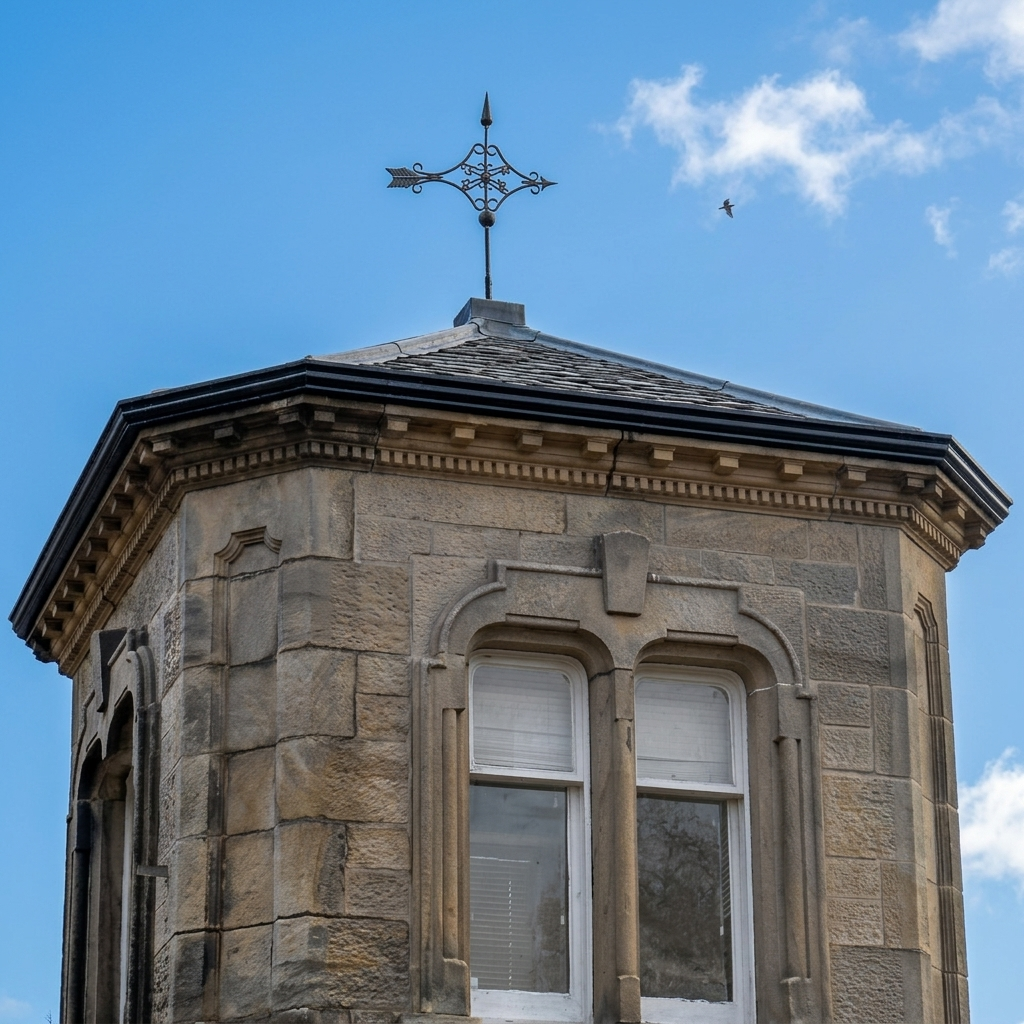
The large copper Victorian arrow weathervane in daylight, showing the classical stonework, dentil moulding and arched windows of the octagonal tower below.
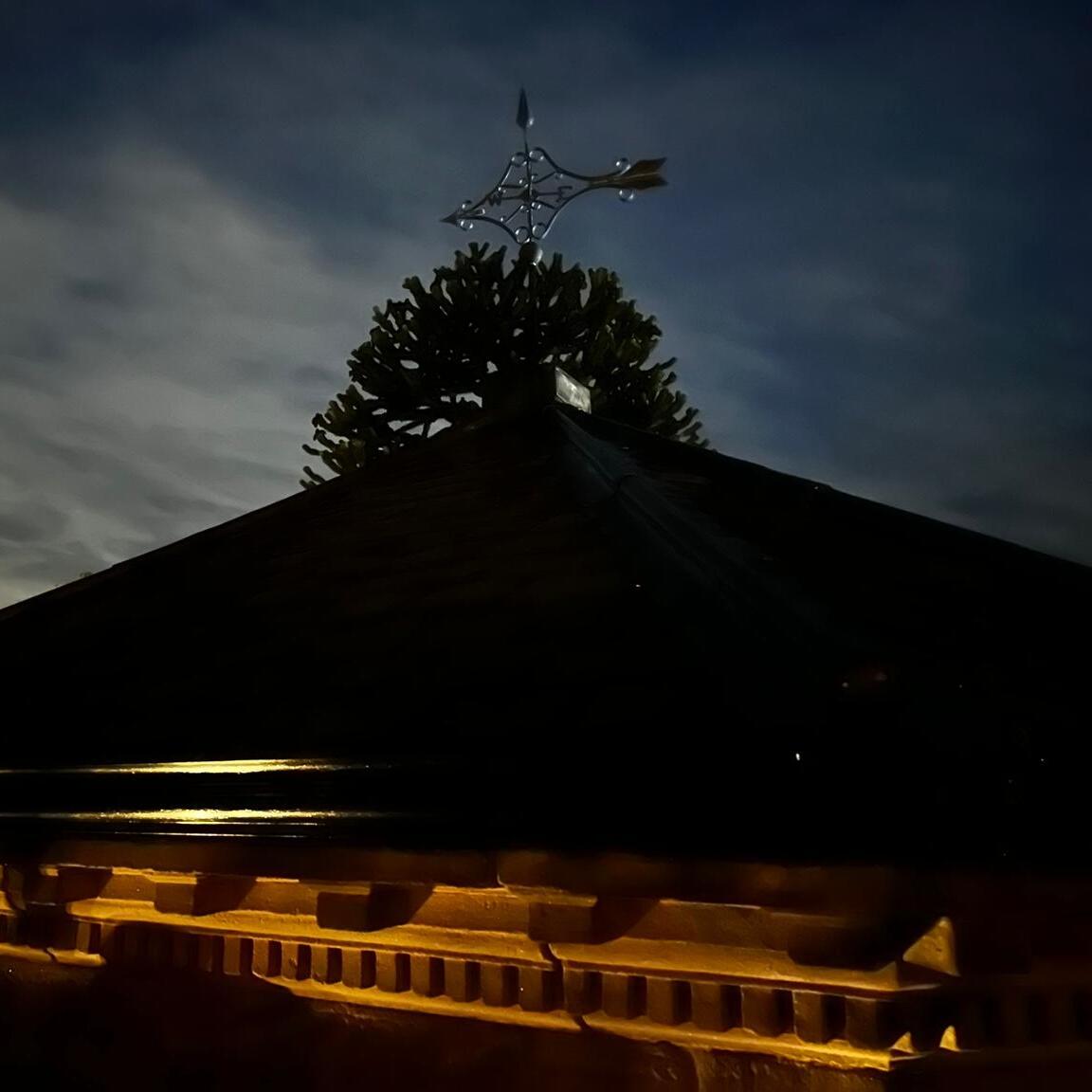
The same weathervane photographed at night, its ornate silhouette sharp against a cloud filled sky with the illuminated cornice below and a coniferous tree rising behind.
These two photographs of the same installation demonstrate the range of visual character a copper Victorian arrow weathervane can carry across a single day. In the daytime image, the bright natural light picks out every element of the classical tower: the texture of the dressed blockwork, the projecting dentil course beneath the eaves, the shallow arch of the window recesses and the dark metalwork of the weathervane above it all. The arrow figure and its decorative accents are precisely defined against the blue sky, with a bird in flight visible in the distance providing a moment of natural contrast to the permanence of the stone below. The night photograph is a completely different experience of the same object. The tower becomes a form defined by its edges rather than its surfaces, the uplighting on the cornice picking out the architectural detailing in warm tones against the cool darkness above. The Victorian arrow is now a silhouette, its scrollwork and circular accents reduced to a graphic outline that is, if anything, more immediately dramatic than the daytime view. The coniferous tree behind adds an organic element that softens the geometry of the roofline and confirms this is a building embedded in a real landscape.
Related Products and Useful Links
For those exploring the full range of arrow weathervane designs, we also supply the large copper verdigris Victorian arrow weathervane for those who prefer a pre aged patina finish, the medium copper Victorian arrow weathervane for smaller structures, and the traditional arrow weathervane for a simpler heritage style form. The complete copper weathervanes collection brings together all available designs in polished and aged finishes.
Buying Guide: From Browsing to Installation
For a historic stone tower installation, start by assessing the apex fixing point and confirming whether any existing socket, finial or cap stone is present. If it is, the weathervane stem may fit directly with a standard post fitting. If no fixing point exists, a post bracket set into the apex using appropriate mortar is usually the right solution for masonry structures. Scale matters on tall buildings. The large Victorian arrow is the right choice for most towers and civic or institutional buildings of two storeys or more, ensuring the figure remains clearly visible from street or ground level. All products are delivered to UK mainland addresses in England and Wales, and we are happy to advise on the right fitting and size for any specific building before you order.
Frequently Asked Questions
Is a copper Victorian arrow weathervane suitable for a historic or listed building?
Yes, and copper is the historically appropriate material for weathervane installations on heritage buildings. Copper has been used for architectural metalwork on British historic buildings for centuries because it oxidises without corroding structurally, developing a verdigris patina that complements aged stone, brick and slate. A Victorian arrow design on a Victorian or Edwardian institutional building is a sympathetic and historically resonant choice. If the building is listed, it is worth checking with your local planning authority whether consent is required for the installation, though copper weathervanes are generally regarded as appropriate interventions on heritage structures.
How is a weathervane fixed to the apex of a stone tower?
The most common approach for a stone tower installation is a post fitting set into the apex cap or finial stone. Where an existing finial socket is present, the weathervane stem can often fit directly into or over it with a minimal adaptor. Where no fixing point exists, a purpose made post bracket can be bedded into the mortar at the apex using heritage compatible mortars that respect the building fabric. We supply a range of bracket and fitting options and are happy to advise on the right choice for your specific structure before you order.
What is the difference between a Victorian arrow and a standard arrow weathervane?
A standard arrow weathervane uses a simple, unadorned arrow form to indicate wind direction. A Victorian arrow weathervane elaborates on this with decorative scrollwork, cast brass accents and ornamental flourishes that reflect the Victorian period's approach to craftsmanship and decoration. The result is a piece that functions identically as a wind indicator but carries considerably more visual presence and decorative character, making it particularly suited to period, heritage and classically detailed buildings.
Is a Victorian arrow weathervane a good gift for someone restoring a period property?
It makes an outstanding gift. A large copper Victorian arrow weathervane is historically appropriate, made from genuine materials with visible craftsmanship, and becomes a permanent feature of the building rather than a possession that can be mislaid or outgrown. For someone investing time and resources in restoring a period property, a Victorian weathervane is an acknowledgement of that commitment and a contribution to the building's long term character. It also works well as a retirement gift for architects, surveyors and conservation professionals with a lifelong engagement with historic buildings.
Which size Victorian arrow weathervane is right for a large or tall building?
For any building of two storeys or more, or for a tower, civic or institutional structure that will be viewed from ground level at a distance, the large Victorian arrow is the right choice. A medium size weathervane on a tall building will appear undersized and lose visual presence at height. The large figure maintains the proportional relationship between the weathervane and the building, ensuring it is clearly visible from street level and looks correct against the scale of the architecture beneath it.
Explore Our Victorian Arrow Weathervanes
If this installation has inspired you, the large copper Victorian arrow weathervane is available to browse and order directly from our online shop. Whether you are fitting to a stone tower, a period rooftop, a garden gate post or any other structure, our team is happy to advise on design, size and bracket before you order. Browse our full traditional weathervanes range or explore all designs in our complete weathervanes collection.
Featured Products


Boxing hares weathervane


Large copper arrow weathervane


Large copper banner weathervane


Large copper biplane weathervane


Large copper verdigris dolphin weathervane


Large copper verdigris stag weathervane


Large copper verdigris victorian arrow weathervane

