
Restoring and Hand Painting a Spitfire Weathervane
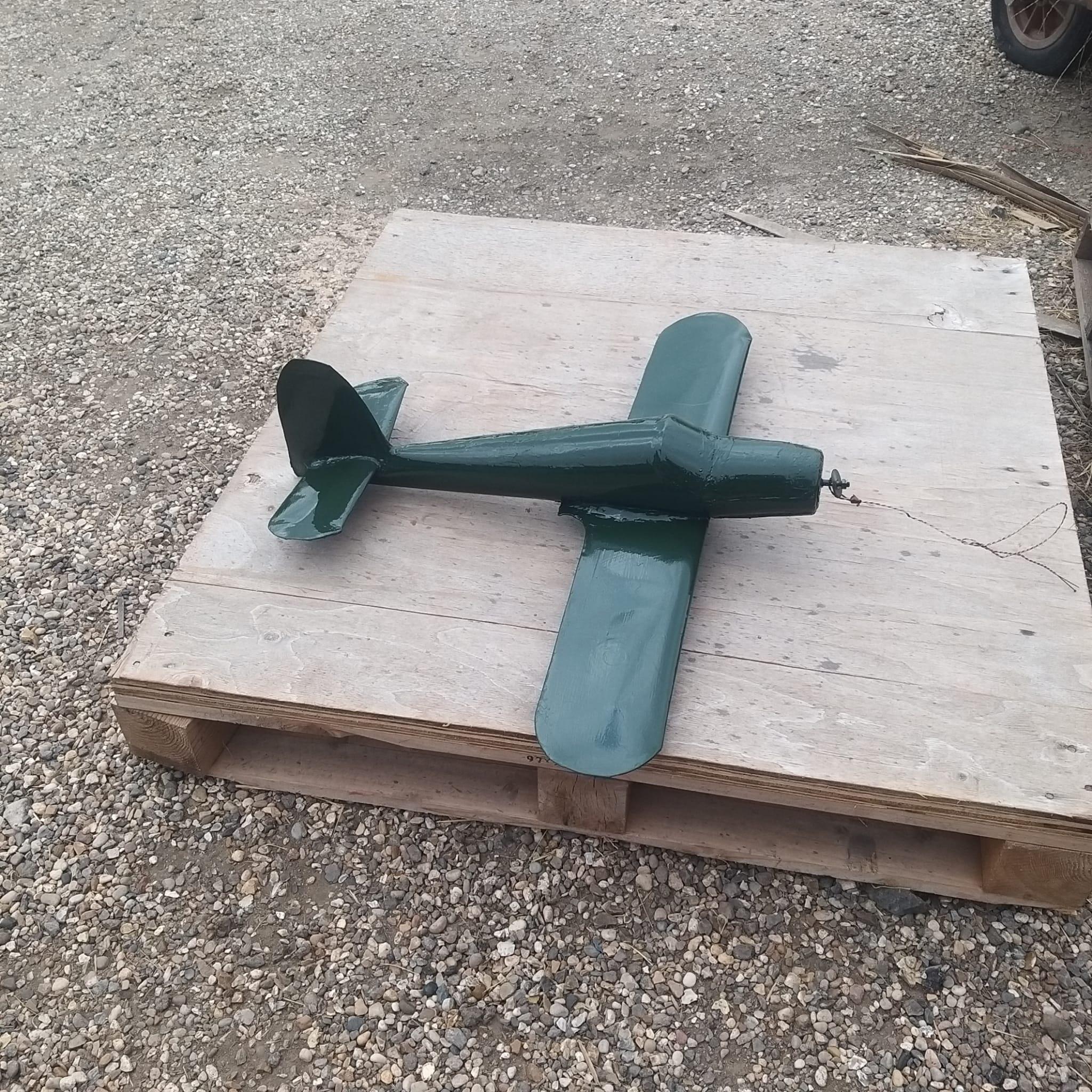
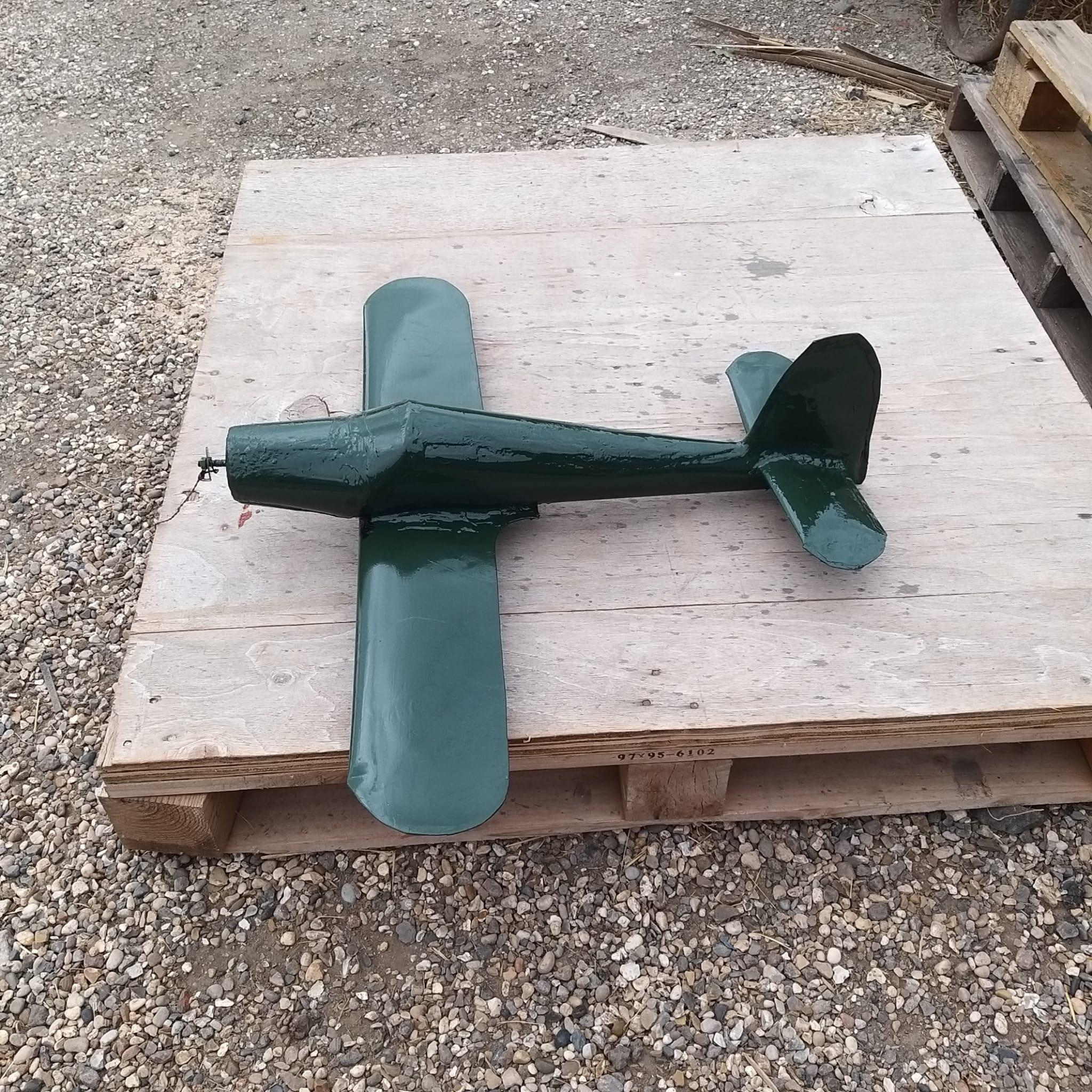
Not every weathervane arrives fresh from the box. Some of the most characterful pieces we encounter have spent years turning in the wind above farmyards and outbuildings, gradually showing the effects of the elements. This article documents a restoration project carried out on a Spitfire weathervane that had served on the farm for many years. The brief was straightforward but ambitious: strip back the tired green paintwork, repair the bodywork but not to an immaculate machine like finish keep some imperfections for raw character, and hand paint the aircraft to represent a World War II Supermarine Spitfire, complete with the farmer's personal initials as a bespoke finishing touch. The results are remarkable, and the process offers useful insight for anyone thinking about restoring an older weathervane rather than replacing it.
The Spitfire Weathervane
The Supermarine Spitfire holds a unique place in British cultural memory. Designed by R. J. Mitchell and flown by RAF pilots during the Battle of Britain, the aircraft's elegant elliptical wings have become symbols of resilience and ingenuity that remain immediately recognisable. It is no surprise that the Spitfire has become one of the most popular aircraft subjects for weathervane makers: the extended fuselage and characteristic wing plan translate naturally into a form that catches the wind effectively and stands out clearly against the sky. The Spitfire weathervane at the centre of this project rotates as a whole to face the wind direction, and the propeller spins independently as the airflow moves across it. This dual movement mechanism makes it particularly engaging to watch, but it also sees real wear over many years of outdoor use, making this restoration not just a cosmetic exercise but a genuine maintenance undertaking.
Assessing the Condition
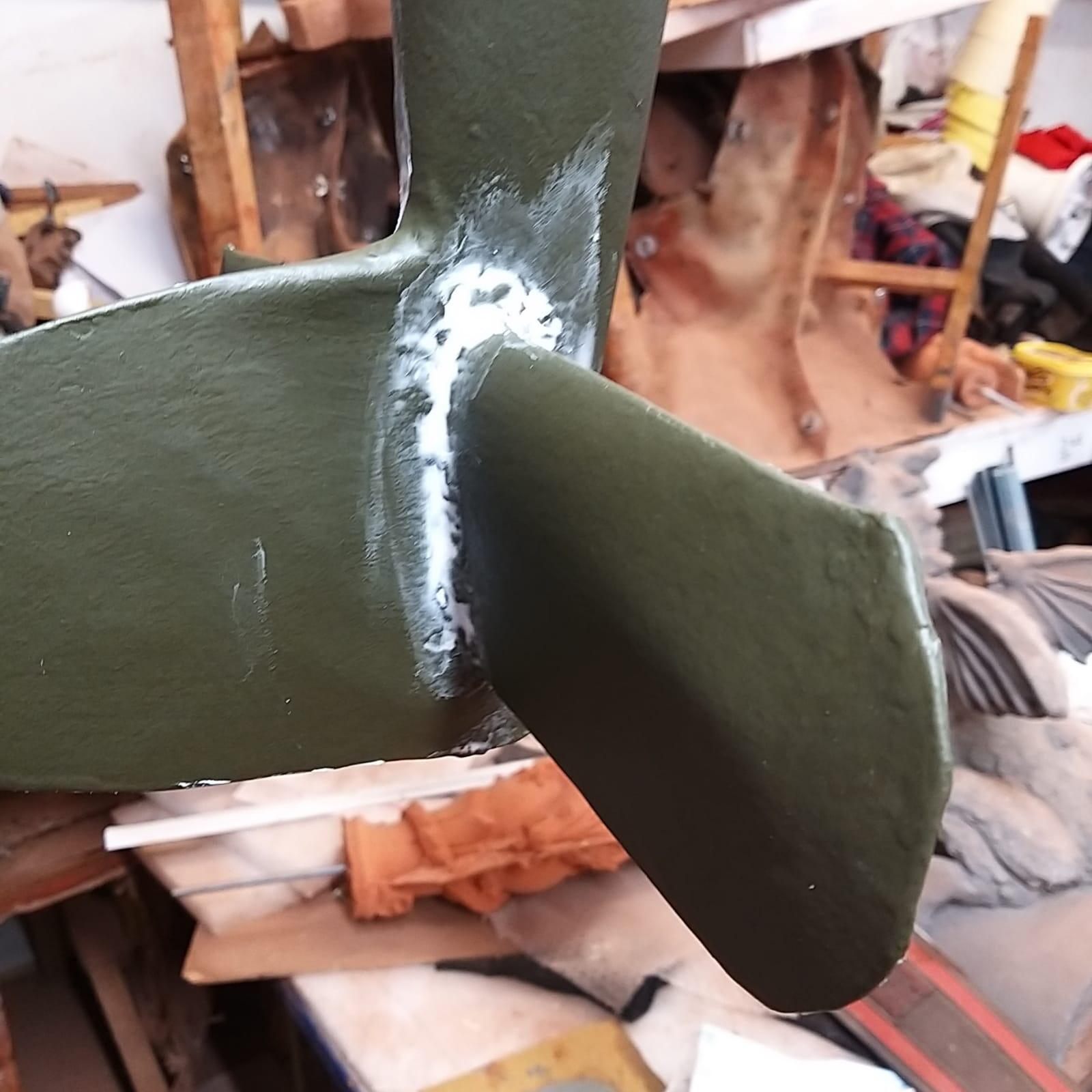
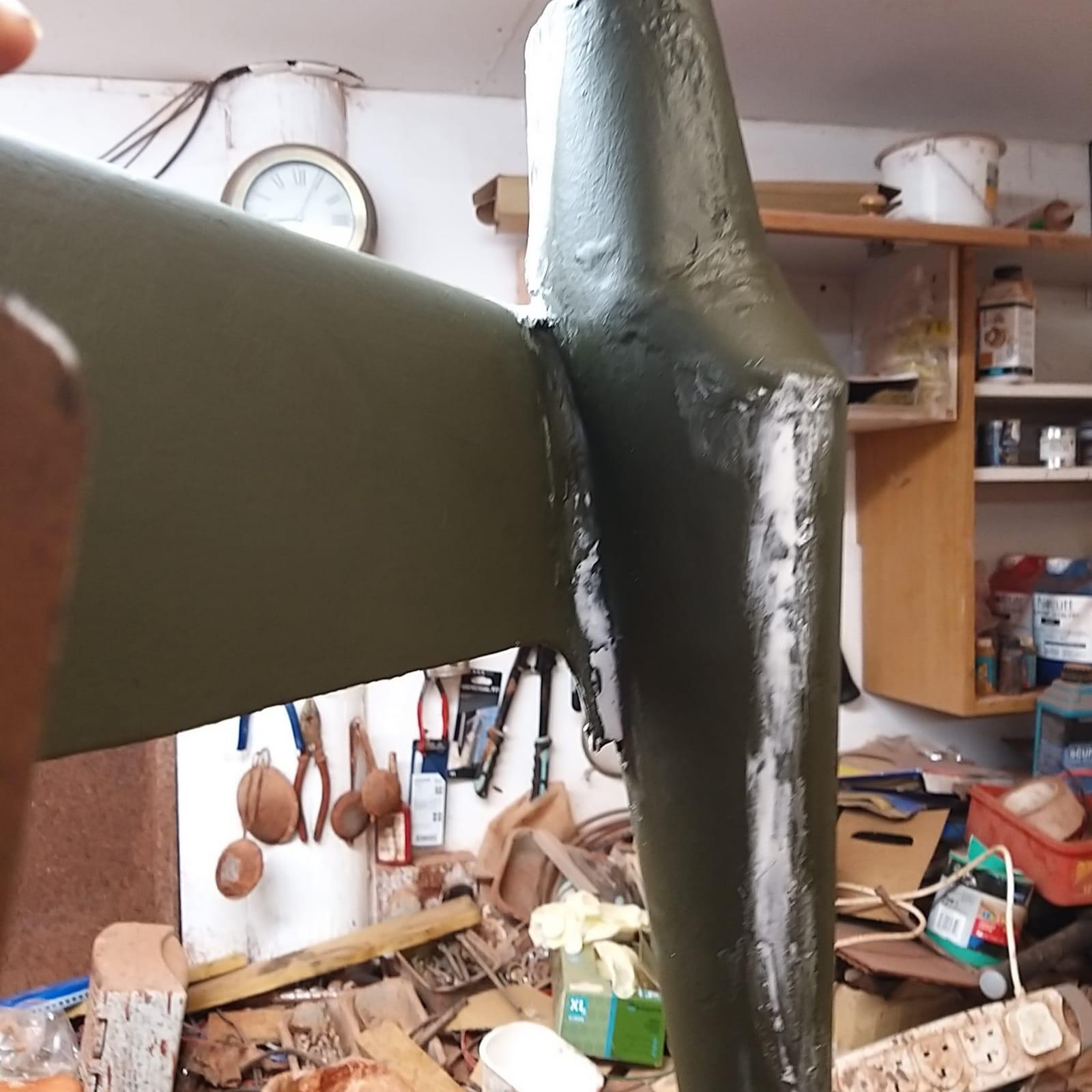
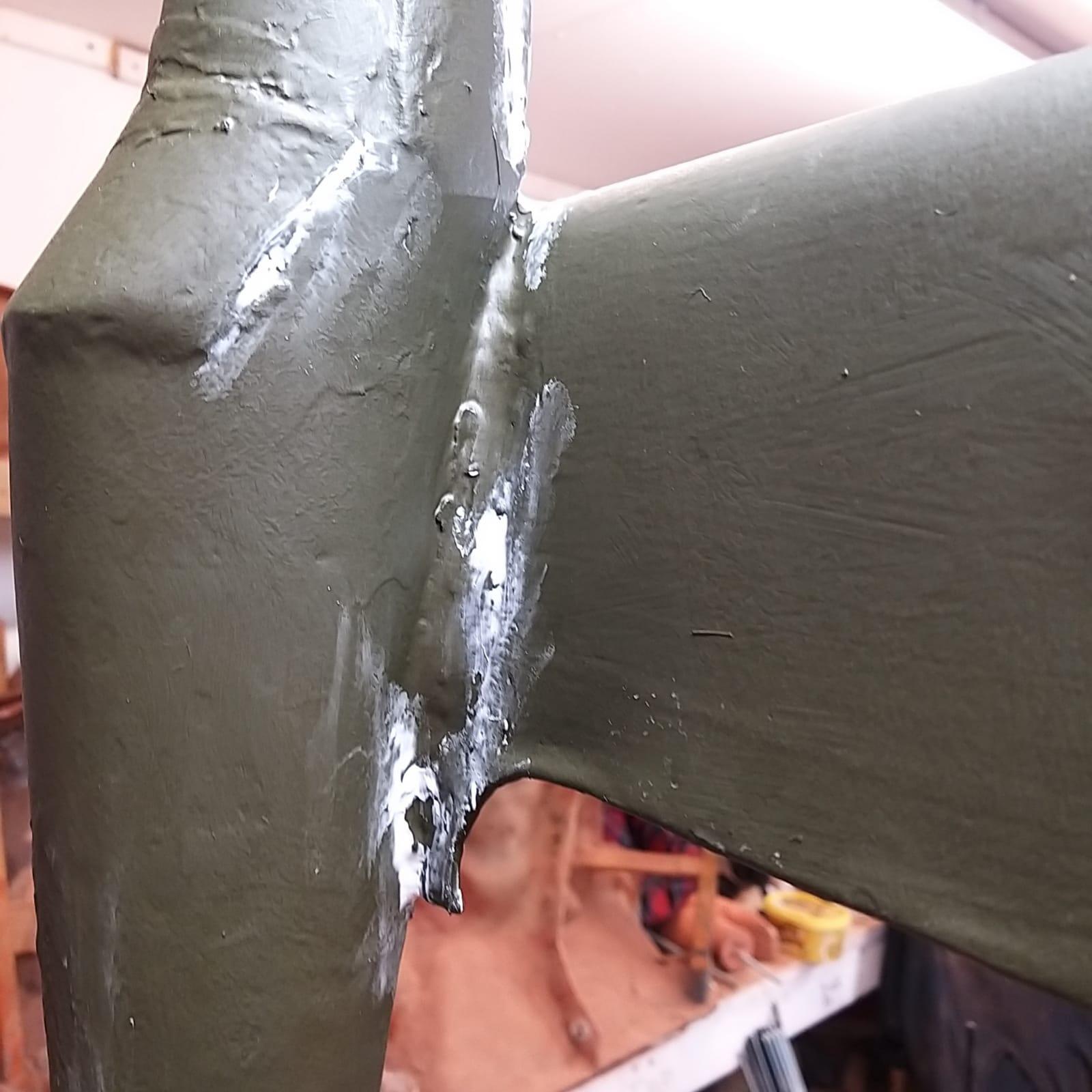
When this Spitfire arrived at the workshop it had clearly had a long working life. The paint surface, which had always been green rather than the authentic RAF camouflage colours, had deteriorated significantly: the finish was chalky and faded in places, lifting in others, and the underlying metalwork showed signs of surface corrosion where the paint had broken down and allowed moisture in. The bodywork of the fuselage and wings had accumulated a number of small chips, dents, and filled areas from previous repairs, and the overall impression was of a piece that had been maintained in a basic way but never properly restored.
The good news, as is often the case with older metal weathervanes, was that the underlying structure was sound. The main body, wings, and tail sections were all intact and holding their shape, and the pivot and propeller mechanism, once cleaned and freed of accumulated dirt and surface oxidation, proved to be in serviceable condition. The decision to restore rather than replace was entirely justified: this Spitfire had decades of useful life left in it once the surface was properly addressed.
Filling, Sanding and Surface Preparation
Surface preparation is the stage that determines everything that follows, and it received the attention it deserved. The first step was stripping back the existing paintwork to expose the bare metal and reveal the true condition of the surface beneath. This process confirmed what the external assessment had suggested: there were several areas of surface pitting and corrosion, particularly around the tail section and cockpit area, that would need to be filled before any primer could be applied. Body filler was applied to all the affected areas, working carefully to restore the original fuselage and wing root contours. With a sculptural subject like this it matters that the filling follows the curves accurately rather than simply bridging over them. The surface was then sanded progressively through finer grades to produce a smooth, even substrate. The tail section required two rounds of filling and sanding before it was fully satisfactory, and the cockpit area, where the canopy framing meets the fuselage, needed careful attention to preserve the characteristic raised profile. Throughout this process the propeller mechanism was protected and kept clear of filler and abrasive compounds, with the blades individually cleaned and checked for any distortion.
Priming the Aircraft
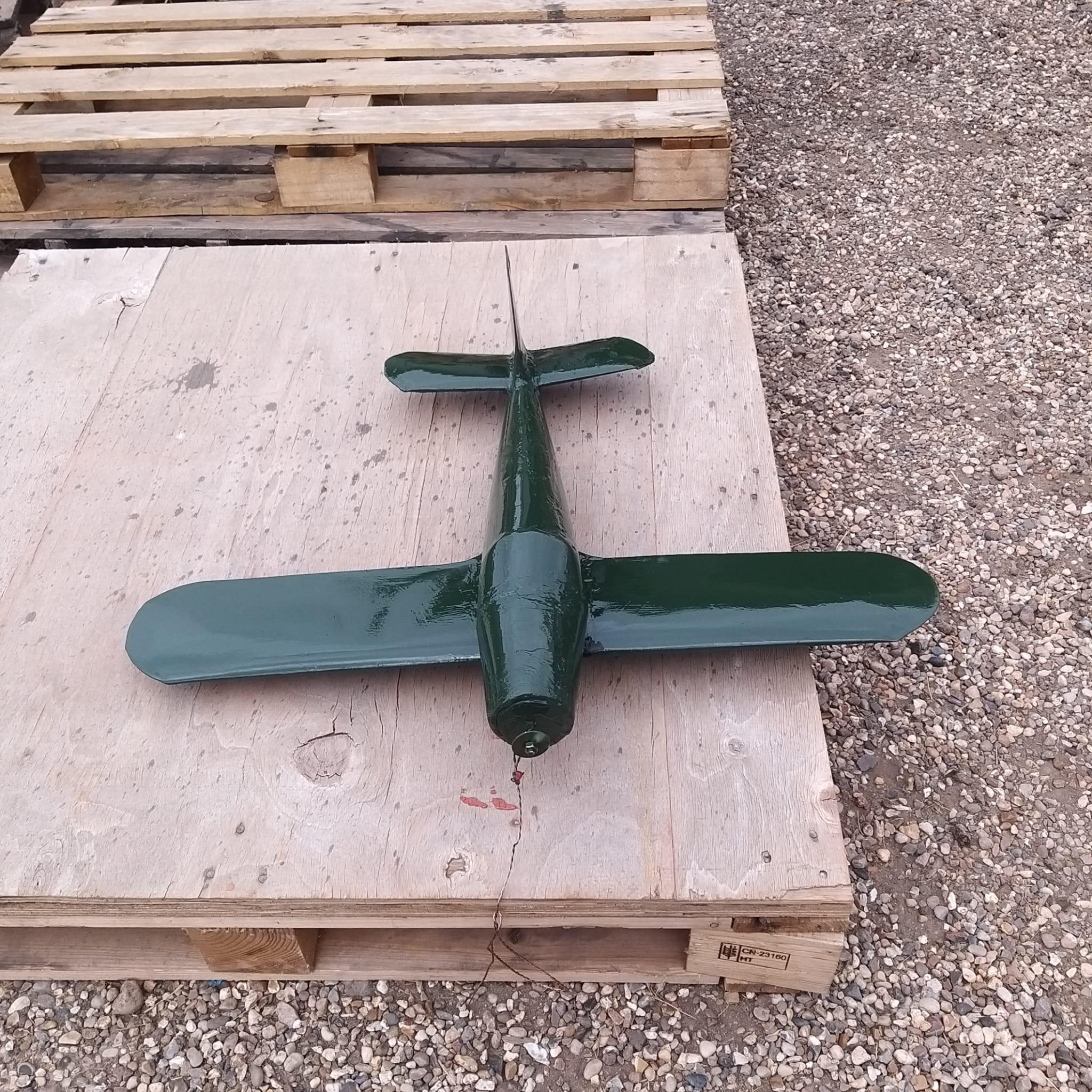
With the bodywork fully prepared, the aircraft was coated in a high quality exterior primer. Priming provides a chemically bonded barrier between bare metal and the atmosphere, preventing the return of the surface corrosion that had established itself under the old paint, and creates a uniform surface that allows topcoats to adhere evenly. This is especially important when the finishing work involves detailed hand painting rather than a flat colour applied by spray. The primed aircraft was taken outside to dry in natural conditions, providing the first opportunity to confirm the restored bodywork in proper light. The surface was smooth and true across all the main surfaces, and the characteristic Spitfire profile, the long nose, curved leading edges, and distinctive elliptical wing tips, was clearly readable once again.
Hand Painting to World War II Markings
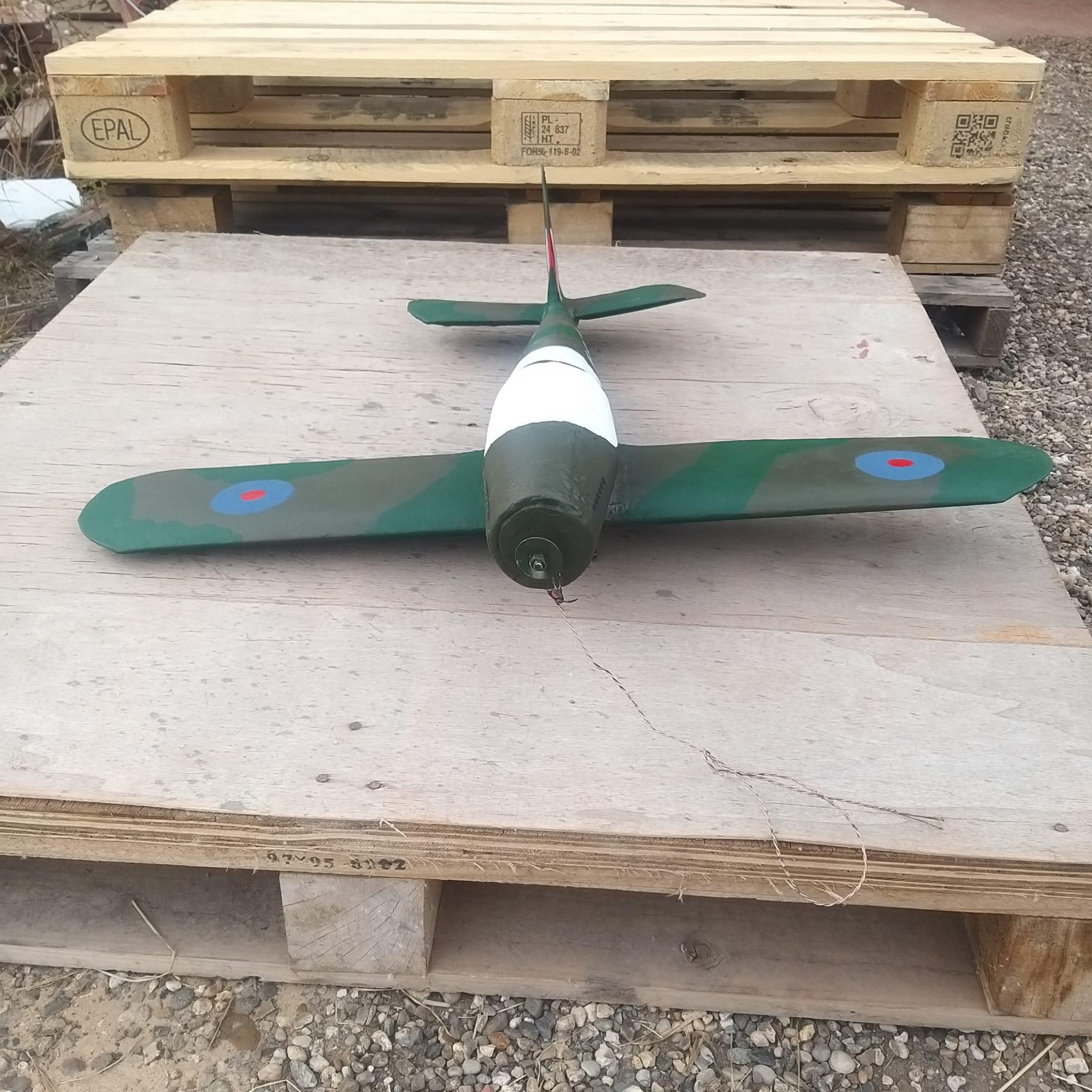
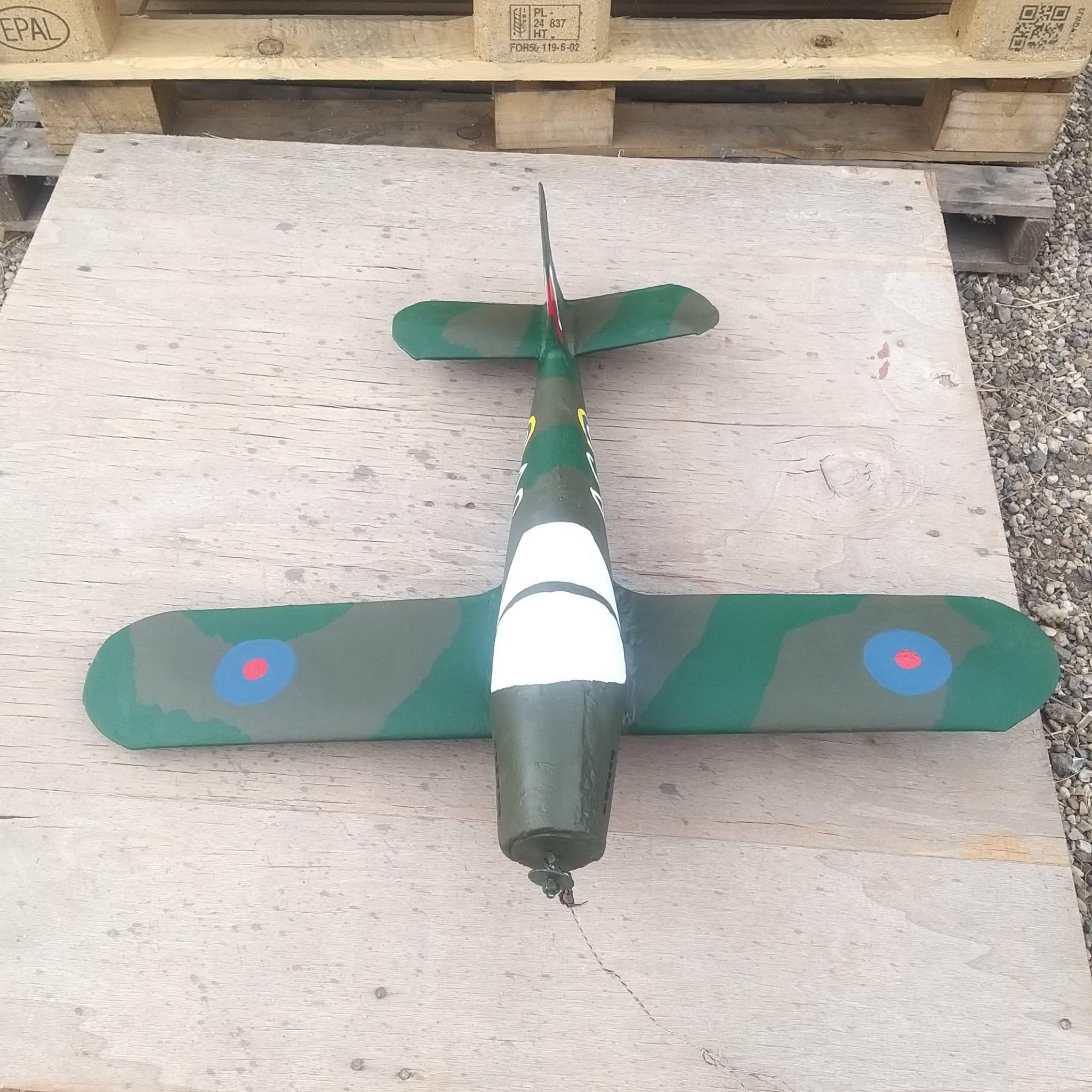
The hand painting stage was where the project moved from restoration to transformation. The starting brief was to paint the aircraft in authentic World War II Spitfire colours, representing the scheme that RAF aircraft carried during the Battle of Britain period: the upper surfaces in the characteristic combination of dark green and dark earth tones, with the pale blue grey of the undersides showing on the wing undersurfaces and lower fuselage. Hand painting at this scale requires a steady hand, the right brush selection for each area, and a good understanding of how paint behaves on curved metal surfaces. The camouflage demarcation lines on a Spitfire are not hard edged but softly blended, and replicating that quality by hand demands patience. The upper surface scheme was built up in stages, establishing the base green before carefully masking and blending the earth tones across the wing upper surfaces and fuselage spine.
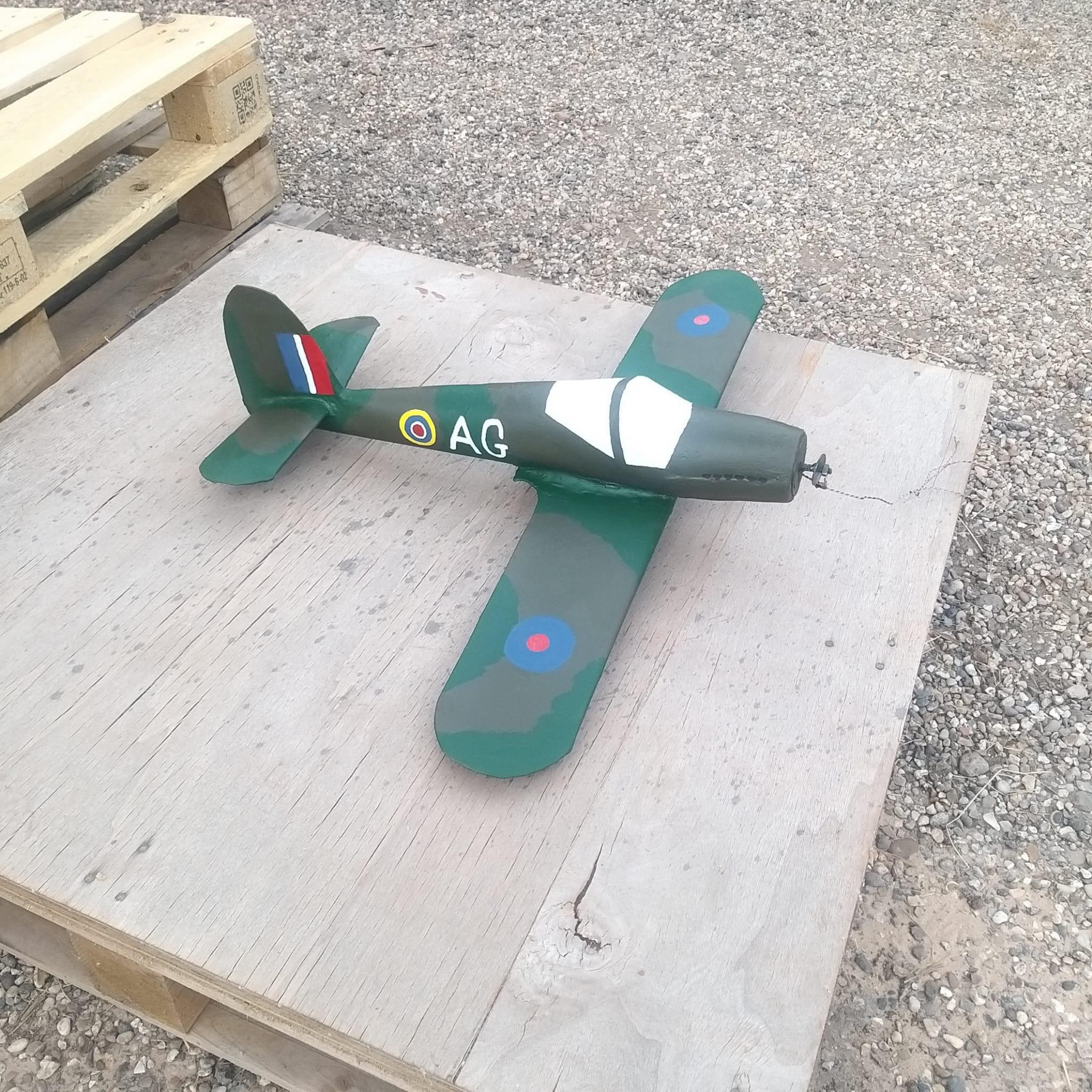
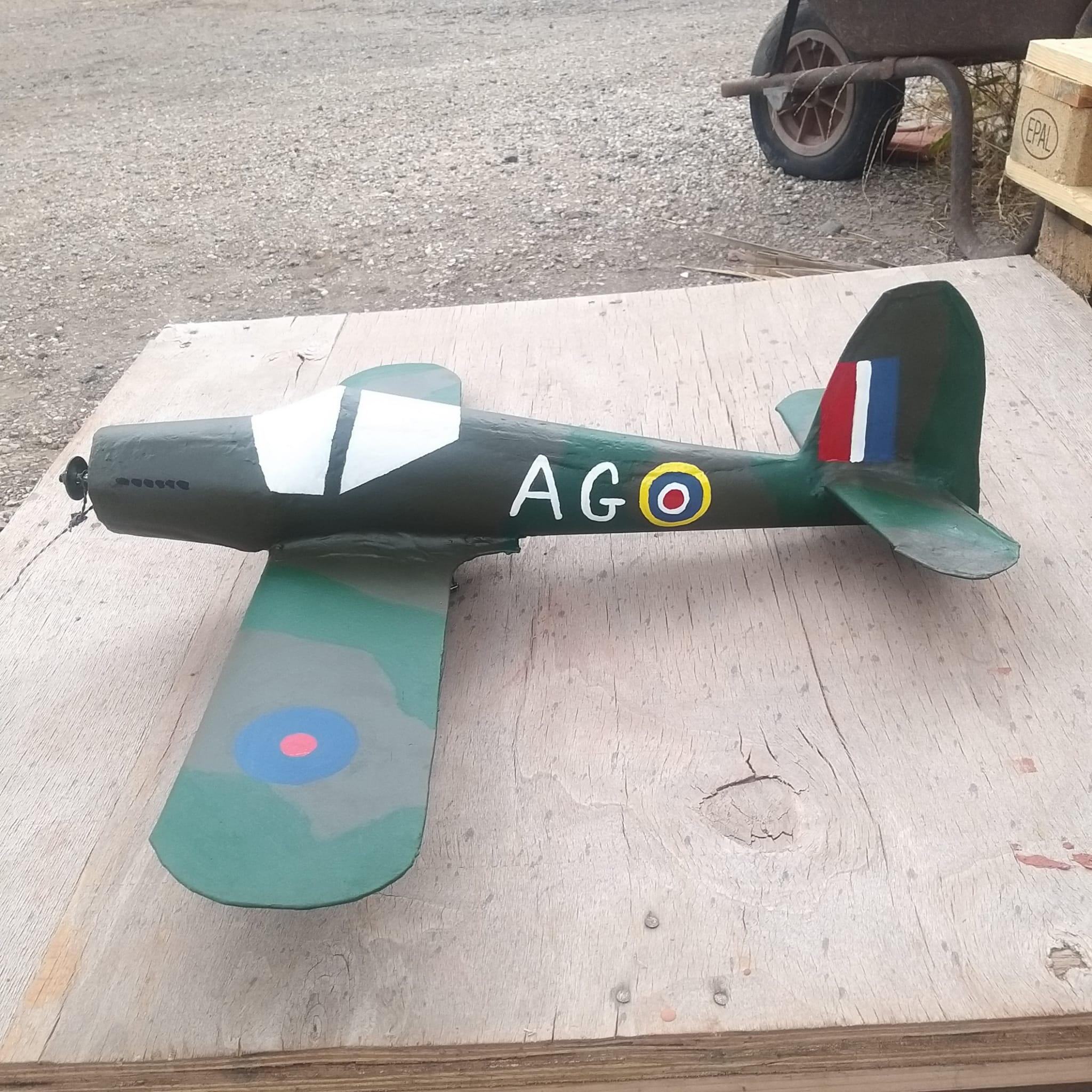
The roundels, those iconic red, white, and blue RAF identification circles that appear on both wing upper surfaces and fuselage sides, were applied by hand rather than using transfers or decals. This is a more demanding approach but produces a result that is visually far more integrated with the painted surface, sitting within the topcoat rather than on top of it. The fin flash, the red, white, and blue vertical stripe on the tail, was handled the same way. The finishing detail that makes this particular aircraft unique is the addition of the farmer's initials, AG, painted onto the fuselage in the style of the personal codes that RAF pilots often applied to their aircraft. In the original markings system, individual aircraft within a squadron were identified by two letter codes painted in large characters on the fuselage sides. The use of the farmer's own initials in exactly this position is a lovely personalisation that connects the weathervane to its owner in a direct and meaningful way, and it adds a level of narrative interest that a standard repaint would not have achieved.
Back in the Sky
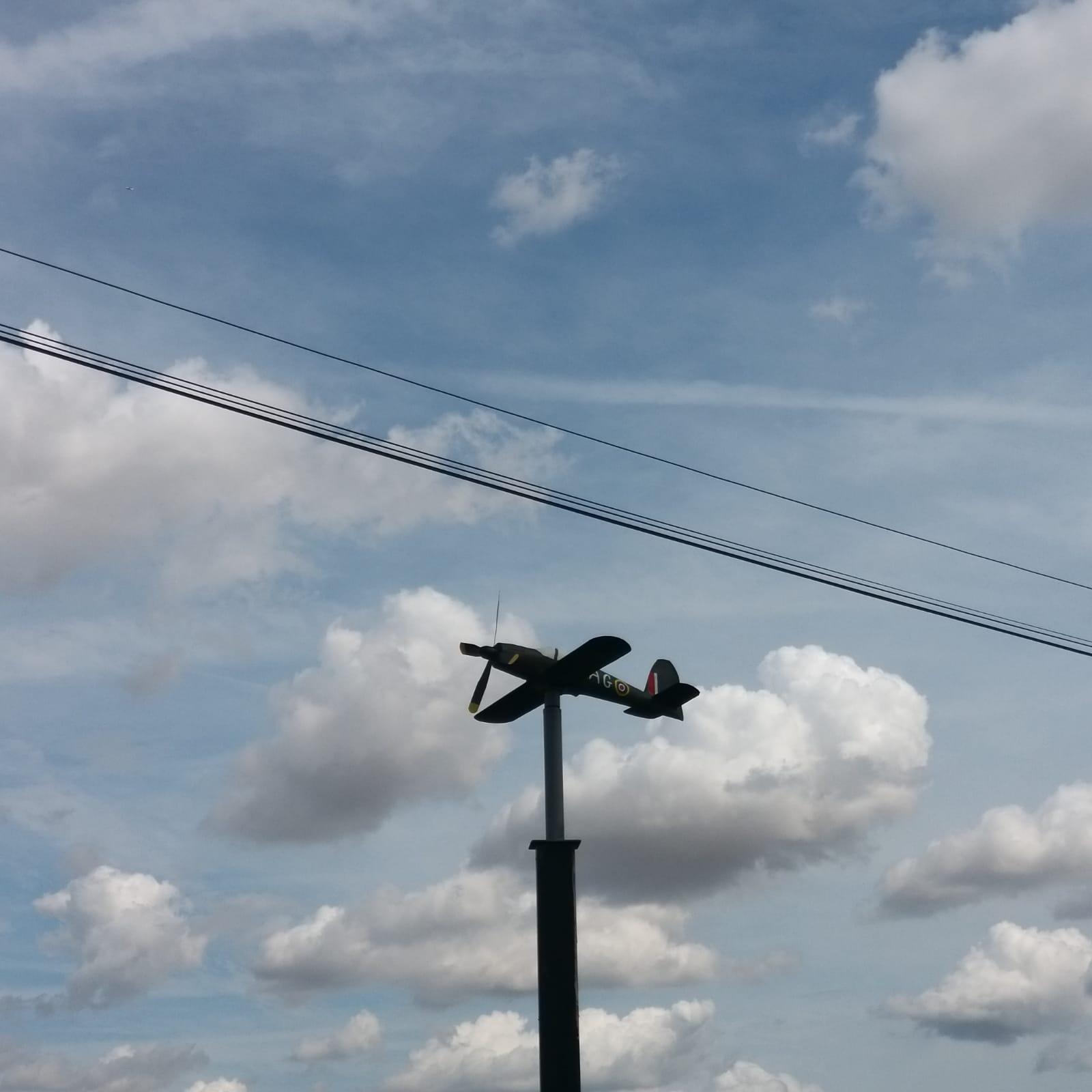
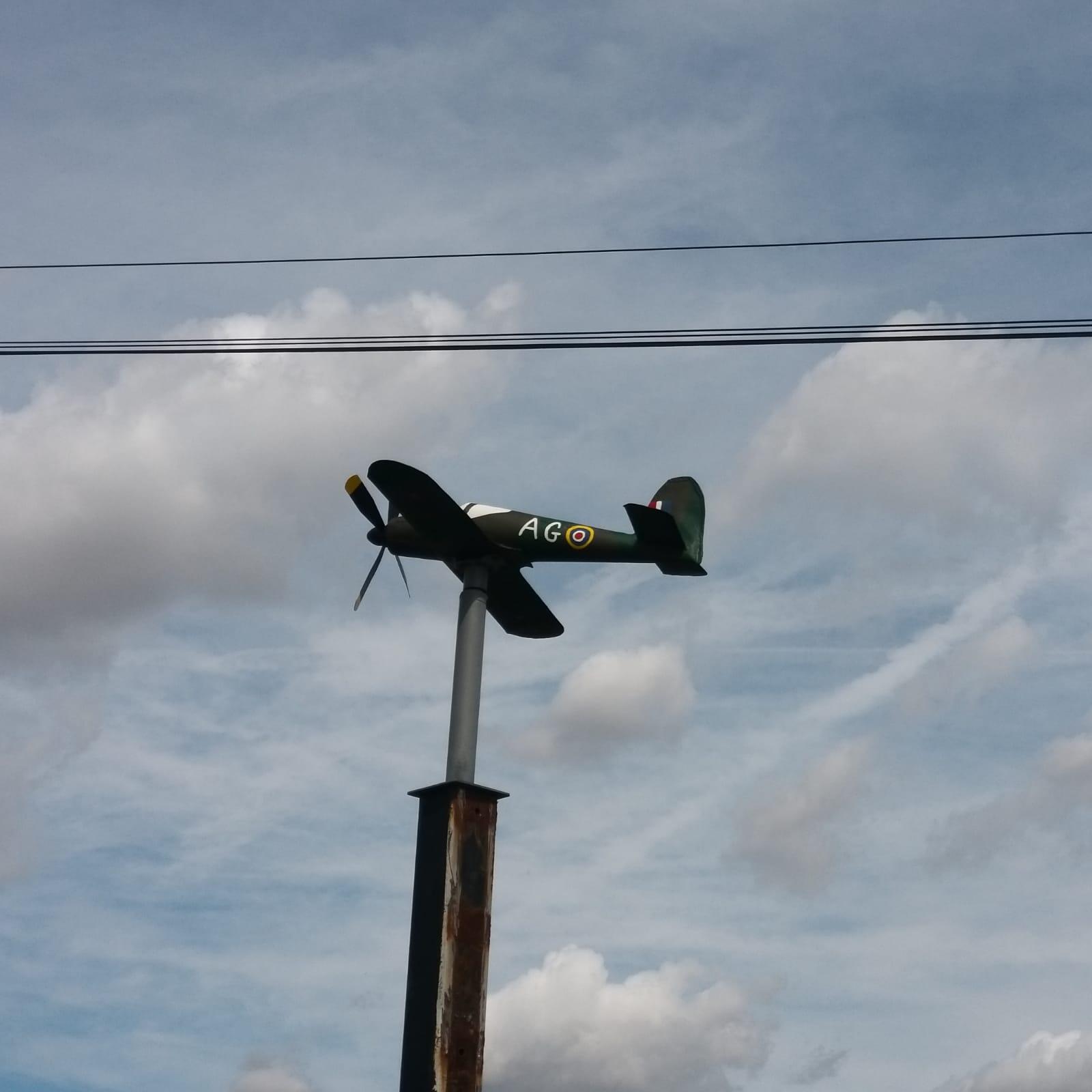
Once the topcoats were fully cured and a protective exterior varnish applied, the Spitfire was ready for reinstallation. The finished aircraft is a genuinely striking piece: where the original had been a faded and anonymous green form, the restored version is a detailed representation of a World War II fighter, complete with subtle camouflage tonal variation, crisp roundels, and the personal identity codes that link it specifically to its owner. Against a backdrop of open sky the Spitfire sits as it should: purposeful and recognisable as the aircraft it represents. The propeller responds to the wind as it always did, and the rotation mechanism, now freed of accumulated friction, moves cleanly and responsively. This weathervane will be a working part of the farm for many more years to come.
Restoration Gallery

Spitfire Weathervanes We Supply
Although the weathervane featured in this restoration project is not one we supply directly, we do stock a range of Spitfire weathervanes for customers looking to add this iconic aircraft to their home, farm, or outbuilding. The Spitfire weathervane we supply is a steel silhouette design that captures the characteristic wing plan and fuselage profile of the aircraft and is available with a range of ridge tile finial bases to suit different roof types. It includes gold detailing that picks out key features of the design and makes the silhouette particularly striking in sunlight.
For smaller structures, sheds, or garden buildings where a full sized weathervane might be too large in scale, we also supply the Spitfire mini weathervane, a more compact version of the design that retains the recognisable Spitfire silhouette in a size suited to modest rooflines and summerhouses. Both designs are part of our wider transport weathervanes and steel weathervanes ranges. Aviation enthusiasts who want to explore beyond the Spitfire may also be interested in the Typhoon mini weathervane, another World War II British fighter represented in the mini weathervane range, and the medium copper biplane weathervane, which offers a different era of aviation history in a warm polished copper finish.
Buying and Installing a Spitfire Weathervane
Customers choosing a Spitfire weathervane from our range have two primary decisions to make beyond the design itself: size and mounting method. The standard Spitfire weathervane is suited to medium to large rooflines, including farmhouses, barns, and substantial outbuildings. The mini version is the better choice for cottages, garden buildings, smaller sheds, and anywhere the roofline scale would make a full sized design look disproportionate.
For the standard Spitfire weathervane, the mounting options in our range include ridge tile finial bases in round, half round, square, and angled configurations to match the ridge tile profile on the customer's roof, as well as a multi angle base that accommodates a range of roof pitches without needing to be ordered to a specific angle. These fittings are designed to be bedded or strapped into the ridge using conventional roofing techniques and should ideally be fitted by a roofer if the installation involves working at height on an occupied property. We supply weathervanes across the UK mainland to England and Wales. For customers interested in an aviation themed weathervane as a gift, the Spitfire carries enormous emotional resonance for anyone with a connection to RAF history, wartime Britain, or aviation more broadly. It works particularly well as a retirement gift, a significant birthday present for an enthusiast, or a housewarming gift for someone moving to a rural property where the aircraft would look entirely at home against an open sky.
Products Featured in This Article
- Spitfire Weathervane — steel silhouette design with gold detailing, supplied with ridge tile finial base options
- Spitfire Mini Weathervane — compact version suited to smaller structures and garden buildings
- Typhoon Mini Weathervane — World War II British fighter in the mini weathervane range
- Medium Copper Biplane Weathervane — aviation design in polished copper
- Transport Weathervanes — full category including aircraft, vehicles, and nautical designs
- Steel Weathervanes — complete range of steel weathervane designs
Frequently Asked Questions
Can a weathervane be restored rather than replaced?
In many cases, yes. If the underlying metalwork is structurally sound and the mechanism is still functional, a weathervane that has suffered from paint deterioration, surface corrosion, or cosmetic damage can be restored through filling, sanding, priming, and repainting. The restoration project documented in this article is a good example: the Spitfire weathervane had a long working life ahead of it once the surface was properly addressed. The key question is whether the structural elements, the body, the pivot, and in spinning designs the propeller mechanism, are still serviceable. If they are, restoration is almost always a worthwhile option.
What paint is best for repainting a metal weathervane?
For a metal weathervane that will be permanently installed outdoors, the paint system needs to be both adhesion primed and topcoated with an exterior grade product that can handle UV exposure, temperature cycling, and rain without lifting or fading. A zinc based or epoxy primer applied over clean bare metal, followed by an exterior enamel or specialist metal paint in the chosen colours, is the most durable approach. For detailed hand painting work like the Spitfire camouflage scheme in this article, artists quality exterior paints or specialist model enamels can be used over the primed base for the finest detail, then sealed with a UV stable exterior varnish to protect the work.
Does the Spitfire weathervane we supply have a spinning propeller?
The Spitfire weathervane featured in the restoration project in this article has a spinning propeller mechanism as part of its design, which is part of what makes it so engaging to watch. The Spitfire weathervane and Spitfire mini weathervane we supply are silhouette designs and do not include a spinning propeller, but they do pivot to face the wind direction and include the recognisable Spitfire wing and fuselage profile with gold detail. If you are specifically looking for a design with a moving propeller, please contact us and we can advise on whether suitable options are available.
Can I have a weathervane personalised with initials or a name?
The personalisation shown in this restoration project, where the farmer's initials were hand painted onto the fuselage in the style of RAF aircraft codes, was carried out as a bespoke part of the restoration work rather than as a standard product option. For the weathervanes we supply, personalisation options vary by design. Please contact us directly to discuss whether a particular design can be personalised and what options might be available. Custom painted details of this kind make a weathervane a genuinely unique object, and the approach seen in this project demonstrates how effective it can be.
Is a Spitfire weathervane a good gift for an aviation enthusiast?
A Spitfire weathervane is an excellent gift for anyone with a passion for aviation, RAF history, or World War II. It works particularly well as a retirement gift, a significant birthday present, or a housewarming gift for someone moving to a rural or period property. The Spitfire's place in British cultural memory gives it a resonance that goes well beyond a purely decorative object, and a weathervane is a permanent, outdoor piece that the recipient will see and appreciate for years. We supply across the UK mainland to England and Wales.
Find Your Spitfire Weathervane
If this restoration project has sparked an interest in Spitfire weathervanes, or if you are looking for a distinctive aircraft design for your own home, farm, or outbuilding, take a look at the Spitfire weathervane and Spitfire mini weathervane we supply, or browse the full sports and hobbies weathervane range for further inspiration. If you have a question about any of the designs or need help choosing the right mounting option for your roof, please get in touch and we will be happy to help.
Featured Products


Boxing hares weathervane


Large copper arrow weathervane


Large copper banner weathervane


Large copper biplane weathervane


Large copper verdigris dolphin weathervane


Large copper verdigris stag weathervane


Large copper verdigris victorian arrow weathervane

